Mieke said, ‘Once you start thinking about it you realise you don’t know anything at all.’
Mumford said, ‘Listen to this …
Our time, the time we have, is the time in which we have “presence.”
But how can we have “presence”? Is not the present moment gone when we think of it? Is not the present the ever-moving boundary line between past and future? But a moving boundary is not a place to stand upon.
If nothing were given to us except the “no more” of the past and the “not yet” of the future, we would not have anything. We could not speak of the time that is our time; we would not have “presence.” …
In the present our future and our past are ours. But there is no “present” if we think of the never-ending flux of time.
The riddle of the present is the deepest of all the riddles of time.
Again, there is no answer except from that which comprises all time and lies beyond it — the eternal.
Whenever we say “now” or “today,” we stop the flux of time for us. We accept the present and do not care that it is gone in the moment that we accept it. We live in it and it is renewed for us in every new present.
This is possible because every moment of time reaches into the eternal. It is the eternal that stops the flux of time for us. It is the eternal “now” which provides for us a temporal “now.”
REFERENCE: Tillich, Paul (1963), The Eternal Now. New York: Charles Scribner and Sons. Chapter 11 III. p87.
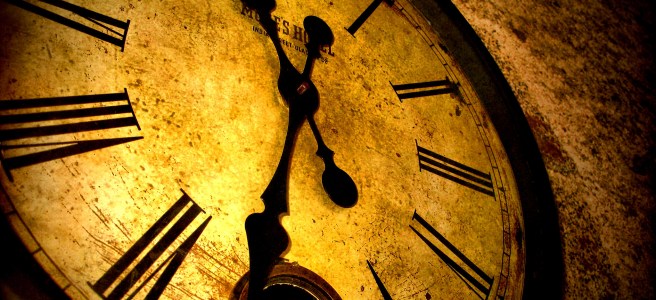
IMAGES: “The Passage of Time”, Toni Verdu Carbo on Flickr
“Abandoned Historic Church Interior with Sunlight” by Breaks Out on pexels

 The Absent Answer