
‘I’m reading a beautiful novel,’ said Mumford. ‘At least the opening is beautiful.’
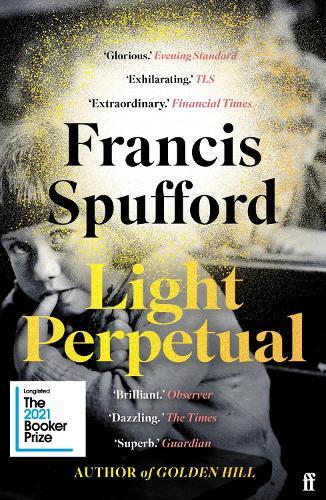
Mieke was apprehensive. Mumford was holding the book up in front of her. Was she planning to read the whole thing aloud?
‘I’ll skip a bit. It’s set in 1944 in London.’
‘The Blitz.’
‘Yes. There’s a missile hitting a shop.’
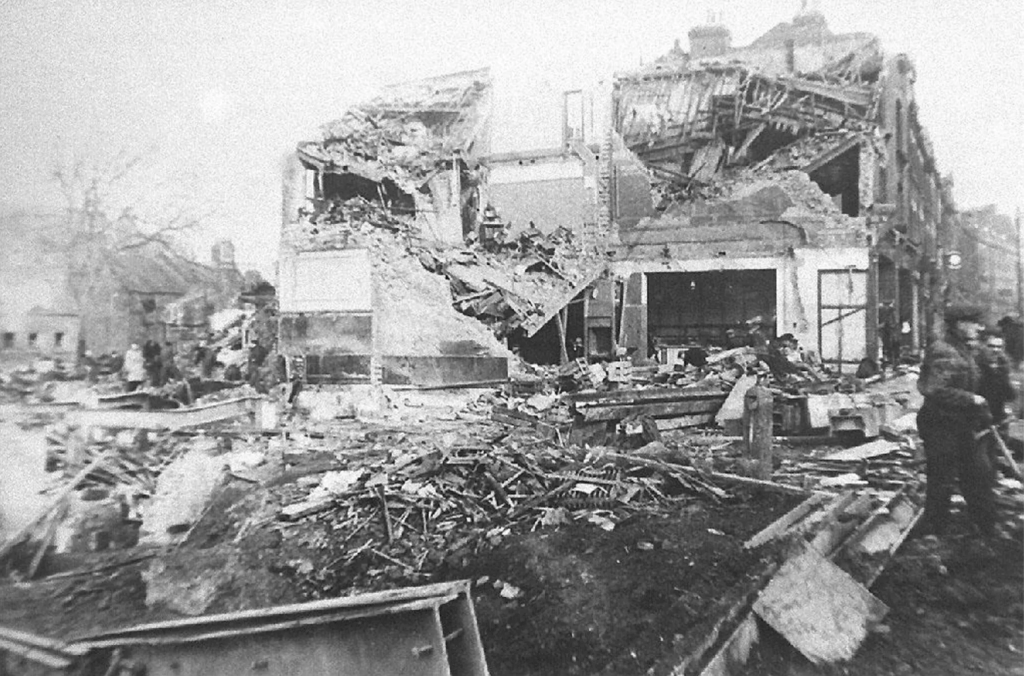
Mieke thought Mumford had used the wrong tense. ‘So a missile has hit a shop. And…’
‘No. It is in the process of hitting the shop. Listen to this.’ Mumford read:
Instants. This instant, before the steel case vanishes, is one ten-thousandth of a second long. A hairline crack in a Saturday lunchtime in November 1944. But look closer. The crack has width. It has duration. Can it not, itself, be split in two? And split again, and again, and again, divided and sub-divided ad infinitum, with no stopping point?
Does it not, itself, contain an abyss? The fabric of ordinary time is all hollow beneath, opening into void below void …
‘I’d process this better if I just read it,’ said Mieke.
Mumford handed her the book. She read:
Every moment you care to define proving on examination to be a close-packed shelf of finer, and yet finer ones without end; finer, in fact, always and forever, than whatever your last guess was.
Matter has its smallest, finite subdivisions. Time does not. One ten thousandth of a second is a fat volume of time, with onion-skin pages uncountable….
Each of the parts is as limitless as the whole, because infinities don’t come in larger and smaller sizes.
They are all infinite alike. And yet somehow, from this lack of limit arises all our ordinary finitude, our beginnings and ends. As if a pontoon had been laid across the abyss, and we walk it without noticing; as if the experience of this second, then this one, this minute, this one, here, now, succeeding each other without stopping … and never quite enough of them, until there are no more of them at all – arose somehow as a kind of coagulation (a temporary one) of the nothing, or the everything, that yawns unregarded under all the years, all the Novembers, all the lunchtimes.
Do we walk through? Do we move in time, or does it move us? This is not time for speculation. There’s a bomb going off.
REFERENCE: Spuffpord, Francis (2021), Light Perpetual. London: Faber Fiction.
IMAGES: Cover of Light Perpetual, via Faber.co.uk
“Woolworths bomb site” from review of Light Perpetual (2021) in the New York Times
“Eternity” by Russ Allison Loar via Flickr
“Time” wallpapers via Google Play
 The Absent Answer