
‘… In fact, I think it could bring down humanity,’ said Mumford.
‘Pardon?’
‘The Socrates Trap. Pay attention.’
Mieke put down her pencil. ‘Sorry. Yes. … What is it again?’
Mumbleforth sighed. ‘Let’s approach it this way … What’s an accipiter?’
Mieke said she didn’t know. Mumford kept staring at her. Mieke reached for her phone and Googled it.
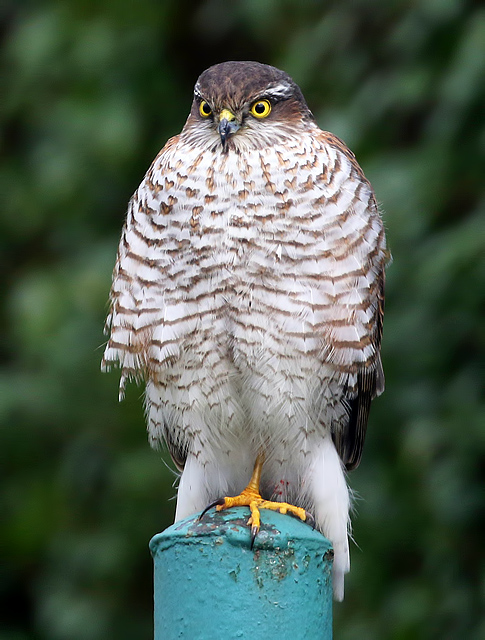
‘It’s a classification of birds of prey,’ she read. ‘A genus. Includes sparrowhawks.’
Mumbleforth spread her hands, as if she’d proved something.
Mieke laughed. ‘Yes. We’re all experts now.’
‘Are we, though?’
‘Yes, oh I see. I know this.’ Mieke gathered her thoughts and then began pointing, as this was written in the air. ‘Data isn’t information, information isn’t knowledge, and knowledge isn’t wisdom. It’s something we all had to think about, once the internet arrived.’
Mumford was still staring, so Mieke went on. ‘And then there are skills. Skills of thinking, observing, reading, motor-co-ordination. We need those too, if we’re going to become experts.’
Mumdord nodded. ‘You’ll never build a bridge using YouTube. And you’ll never do heart surgery, looking up facts about anatomy on your phone.’
‘So what’s a Socrates Trap?’
Mumford said, ‘We are all drowning in data. Yet we’re no more knowledgeable than we ever were, and certainly no wiser. Look at the public discourse. It’s getting stupider and more venal. The world’s spinning out of control and no one knows how to stop it.’
‘Mmmm. But maybe grumpy old women have always talked like this.’
‘We are not wise. But that’s not even the real problem.’
‘All right.’
‘The real problem is that we think we are.’

‘That’s the Socrates Trap. Some people call it the Socrates Paradox, but I think it’s more dangerous than that.’
Mumford looked up something on her iPad, and handed it to Mieke.
‘This is from the Apology of Socrates, the speech he gave at his trial.’

While Mieke read, Mumford kept talking.
‘Actually this gives us a wonderful example of what I’m talking about. There are things all over the web that purport to be quotes by Socrates, but they’re paraphrases. Paraphrases of translations of a transcription of a speech that is lost in time. And the sources are never acknowledged. It’s important to know where things come from, and what was originally written.’
‘Or, in this case, said.’
‘Things have to be grounded in the truth. And this is the best we can do.’
‘You call this the Socrates Trap.’
‘We’re all in it, you see. We’re all the other guy.’
Mieke read what (according to Plato, according to translator Cary) Socrates had said:
I went to one of those who have the character of being wise… When I left him, I reasoned thus with myself:
I am wiser than this man, for neither of us appears to know anything great and good; but he fancies he knows something, although he knows nothing; whereas I, as I do not know anything, so I do not fancy I do.
THE APOLOGY OF SOCRATES
BY PLATO
TRANSLATED BY HENRY CARY
EDITED, ANNOTATED, AND COMPILED BY RHONDA L. KELLEY
IMAGES:
Featured Image: Daniel Maclise, Scene from Twelfth Night, Malvolio and the Countess, 1847, via Wikimedia
Female sparrowhawk (Accipiter nisus) via Geograph
“Apology of Socrates” L P Boitard via Centre for Hellenic Studies, Harvard University
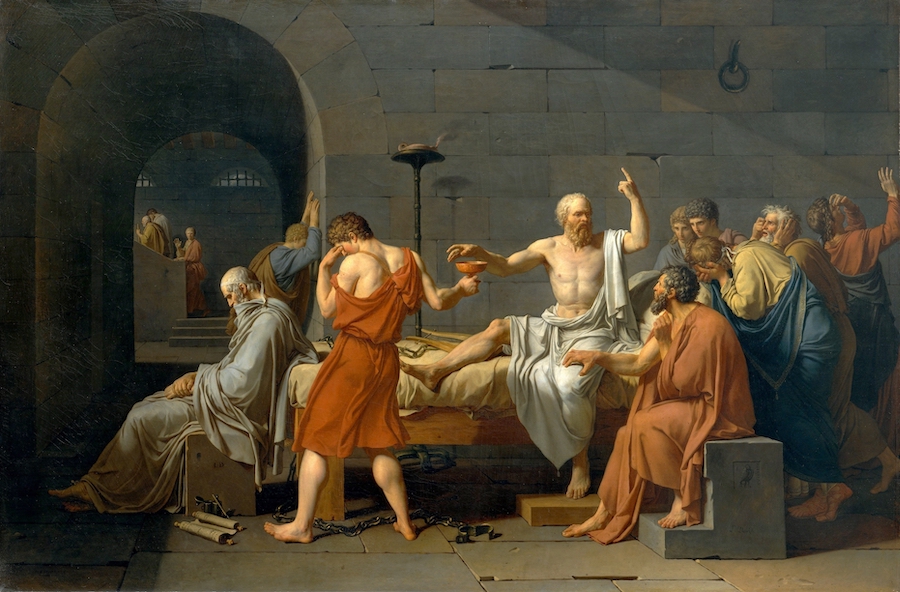
“The Death of Socrates” by Jacques-Louis David, 1787. via wikipedia
Andrews, Henry; William Pleater Davidge as Malvolio in ‘Twelfth Night’ by William Shakespeare; Theatre Royal, Bath; via Wikipedia and Art UK.
 The Absent Answer
